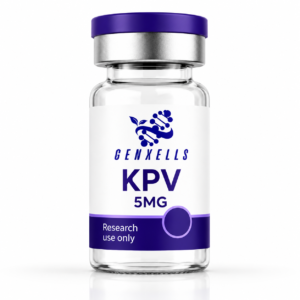
KPV 5mg is a small peptide that attracts growing interest in peptide research because of its connection to alpha-melanocyte-stimulating hormone (α-MSH) and its potential role in regulating inflammatory processes. KPV consists of three amino acids—lysine, proline, and valine—and represents the C-terminal tripeptide sequence of α-MSH. Research particularly focuses on its possible anti-inflammatory, immune-modulating, and tissue-protective properties.
For researchers exploring peptide biology, KPV 5mg offers an interesting compound for studying cellular signaling and inflammatory pathways. However, it is important to distinguish laboratory findings from established medical applications. Current evidence for KPV remains primarily preclinical, with important questions about human safety, pharmacokinetics, dosage, and effectiveness still requiring investigation.
What Is KPV 5mg?
KPV, also identified as α-MSH(11-13), is the three-amino-acid sequence Lys-Pro-Val. It originates from the C-terminal region of α-MSH, a naturally occurring melanocortin peptide. Researchers identify KPV as the minimal sequence that retains several of the anti-inflammatory characteristics associated with α-MSH.
The 5mg designation refers to the quantity of peptide in a research preparation. It does not represent an established human therapeutic dose. No approved prescribing guideline establishes KPV 5mg as a treatment dose for inflammation or another medical condition.
Research into α-MSH-related peptides indicates that KPV can influence inflammatory signaling without producing the pigmentary effects associated with the complete α-MSH molecule. This distinction makes KPV particularly interesting for laboratory investigation.
How Does KPV Work in Research?
One major area of KPV research involves nuclear factor kappa B (NF-κB), a signaling pathway associated with inflammatory responses. Studies indicate that KPV can interfere with inflammatory signaling and reduce NF-κB-related activity in certain experimental cell systems.
Research involving bronchial epithelial cells also indicates that KPV can affect the movement of inflammatory signaling proteins into the cell nucleus. This mechanism provides one possible explanation for the peptide's observed anti-inflammatory activity in laboratory models.
KPV also receives attention because its activity does not appear to depend entirely on the classical melanocortin receptor pathways used by full-length α-MSH. Some experimental findings suggest that KPV may interact with inflammatory signaling through different mechanisms. Researchers continue to investigate these pathways to understand the compound more precisely.
KPV and Inflammation Research
Anti-inflammatory activity represents one of the most important research areas surrounding KPV 5mg. Laboratory studies associate KPV with reduced inflammatory responses under specific experimental conditions.
Research on α-MSH-derived peptides demonstrates effects involving inflammatory cytokines, immune-cell activity, and NF-κB signaling. KPV specifically shows activity in several experimental models, although these findings do not establish that the same effects occur in humans.
Animal research also provides an interesting direction for intestinal inflammation studies. In experimental models of colitis, KPV treatment associates with reduced inflammatory changes and improved recovery measures. These findings help researchers evaluate KPV as a possible candidate for future investigation into inflammatory bowel conditions.
KPV 5mg and Gut Research
The relationship between KPV and intestinal inflammation receives considerable scientific attention. Researchers study how small peptides interact with intestinal cells and inflammatory pathways.
Experimental colitis models provide evidence that KPV can influence inflammation within intestinal tissue. Some studies report reductions in inflammatory infiltration and other disease-related markers following KPV exposure. These results support additional research into peptide-based approaches for understanding intestinal inflammation.
However, animal-model findings should not be interpreted as proof of a treatment benefit in people. Human gastrointestinal physiology, peptide absorption, metabolism, and immune responses can differ considerably from experimental animal models.
KPV and Skin Research
KPV also appears in research involving skin and epithelial biology. Since α-MSH-related signaling has important connections with skin inflammation, researchers investigate whether smaller peptide fragments can influence inflammatory responses without the pigmentary effects associated with full-length α-MSH.
Cell-based studies involving human keratinocytes provide evidence that KPV can influence intracellular signaling. Such research helps scientists investigate potential applications involving inflammatory skin biology and epithelial protection.
This area remains experimental, and KPV should not be considered an established treatment for dermatological conditions.
Antimicrobial Research
Another research direction involves the potential antimicrobial properties of α-MSH-derived peptides. Laboratory studies report activity involving microorganisms such as Staphylococcus aureus and Candida albicans.
The C-terminal KPV sequence contributes to some of the antimicrobial activity observed in α-MSH-related research. These findings make KPV interesting from an innate-immunity perspective and encourage further investigation into how short peptides interact with microbial organisms.
Importantly, laboratory antimicrobial activity does not automatically translate into an effective antimicrobial treatment for humans. Further studies are necessary to establish activity, safety, delivery, and clinical relevance.
Why KPV 5mg Attracts Research Interest
KPV has several characteristics that make it scientifically interesting. First, it is exceptionally small, consisting of only three amino acids. Second, it represents a functional fragment of a naturally occurring peptide. Third, research identifies several biological activities associated with inflammatory regulation.
The relatively simple structure also makes KPV useful for investigating peptide structure-function relationships. Scientists can examine how changes in individual amino acids influence biological activity and signaling.
For laboratories and researchers interested in peptide science, GenXells provides a relevant destination for exploring peptide-related research information and products.
Is KPV 5mg FDA Approved?
KPV is not an FDA-approved drug. In 2026, the FDA evaluates KPV-related bulk drug substances in connection with potential compounding considerations, while FDA documentation states that it does not identify clinical studies or human exposure data for KPV through any route of administration.
This regulatory distinction is important. Research interest, laboratory evidence, or consideration by an advisory body does not mean that a peptide has approval for treating or preventing a disease.
Safety and Research Considerations
The lack of human clinical data creates significant limitations around KPV 5mg. Researchers do not have an established human therapeutic dose, comprehensive human pharmacokinetic profile, or well-defined human safety database.
For this reason, claims about specific health benefits, optimal dosage, long-term safety, or guaranteed results require caution. Research findings from cell cultures and animal models provide useful scientific information, but they do not establish human clinical effectiveness.
Anyone considering a peptide for personal health should consult an appropriately qualified healthcare professional rather than relying on research-only product information.
Future Research Potential
KPV continues to attract attention because of its potential relationship with inflammatory signaling, epithelial biology, intestinal inflammation, and antimicrobial activity. Future research can help clarify its mechanisms, stability, delivery methods, pharmacokinetics, and safety.
Human clinical studies are particularly important. Well-designed trials can determine whether observations from laboratory and animal research translate into meaningful effects in people.
As peptide science develops, KPV 5mg remains an interesting research compound with several promising biological pathways but substantial evidence gaps. Its strongest current value lies in scientific investigation rather than established clinical treatment.
Conclusion
KPV 5mg represents a compact α-MSH-derived tripeptide with an expanding preclinical research profile. Studies investigate its relationship with NF-κB signaling, inflammatory responses, intestinal inflammation, epithelial biology, and antimicrobial activity.
At the same time, the absence of established human clinical evidence means KPV requires a research-focused perspective. It is not appropriate to present experimental findings as proven medical benefits or to treat 5mg as an established human dose.
For readers researching KPV peptide science, understanding both its potential and its limitations provides a more accurate foundation for evaluating future developments in peptide research.


No comments:
Post a Comment